Why is The Hague important? A short history of the city that was never a city
September 9, 2026 · by Robin Lenskens
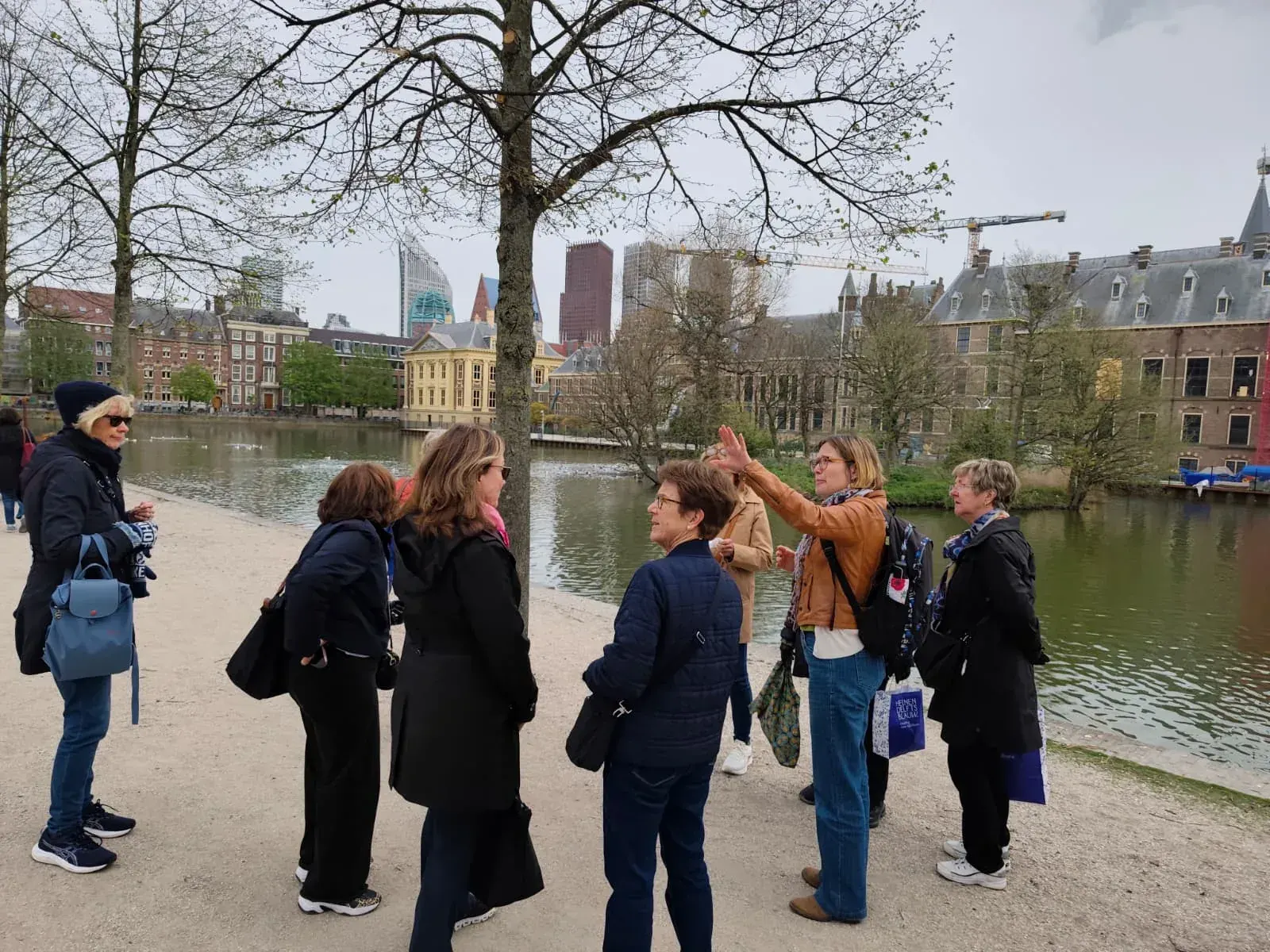
The Hague is where the Dutch government sits, where the king works, and where an international arrest warrant gets its name. It is also not the capital of the Netherlands, and for most of its history it was not even legally a city. That contradiction is the whole story, and it starts with a hedge.
The short answer
- What does Den Haag mean? The full name is ‘s-Gravenhage, the count’s haag: the enclosed hunting grounds of the Counts of Holland. Den Haag is the everyday short form.
- Is The Hague the capital? No. Amsterdam is the constitutional capital. The Hague is the seat of government, parliament and the monarch, which is why every political story in the country happens there.
- Why is The Hague famous internationally? It holds the International Court of Justice, the Permanent Court of Arbitration, the International Criminal Court, the OPCW, Europol and Eurojust. When the news says “The Hague”, it usually means one of those.
A hunting lodge that got out of hand
In the middle of the 13th century the Counts of Holland kept a residence in the dunes and woods north of Delft, on the edge of good hunting country. Count Floris V turned it into something more permanent in the 1280s, and the great hall he built, the Ridderzaal, still stands with its steep wooden roof over the courtyard now called the Binnenhof.
Because the settlement around it existed to serve the court rather than to trade, it was never given city rights in the medieval sense. It stayed, technically, the largest village in Europe until the French period in the early 1800s finally made it a city on paper. The Dutch still enjoy this fact more than they should.
What it did have was power. When the Dutch Republic took shape after the revolt against Spain, the States General met at the Binnenhof, and the machinery of a new country grew up around a courtyard built for a count who liked deer.
The Golden Age, and the darkest afternoon
In 1672, the Year of Disaster, the Republic was invaded from three sides at once. The grand pensionary Johan de Witt and his brother Cornelis were blamed for the state of the army. On 20 August a mob dragged them out of the Gevangenpoort prison at the edge of the Binnenhof and killed them both in the street. It remains the most violent thing that ever happened in this very orderly town, and we walk past the spot on the tour.
The same century gave the city the Mauritshuis, built between 1633 and 1644 as a private house for Johan Maurits of Nassau-Siegen, whose fortune came from Dutch Brazil and the slave trade that ran with it. The museum says so plainly now. Inside hang Vermeer’s Girl with a Pearl Earring and his View of Delft, Rembrandt’s Anatomy Lesson, and Fabritius’s Goldfinch, painted in Delft in the year its painter was killed by the gunpowder explosion of 1654.
How The Hague became the city of peace and justice
The international part is younger than most visitors assume, and it was deliberate.
In 1899 Tsar Nicholas II proposed a conference on the laws of war, and the Dutch offered a neutral venue. Twenty-six states met at Huis ten Bosch, and the meeting produced the Permanent Court of Arbitration, the first standing international tribunal of its kind. A second conference followed in 1907.
The court needed a building. Andrew Carnegie put up 1.5 million dollars for it, and the Peace Palace opened on 28 August 1913, one year before the war that made a mockery of it. It survived anyway, and after 1945 the new International Court of Justice, the judicial organ of the United Nations, moved in.
The rest followed the institution. The tribunals for the former Yugoslavia and for Rwanda sat here, the International Criminal Court opened in 2002, and the OPCW, which won the Nobel Peace Prize in 2013, has its headquarters in the city. So do Europol and Eurojust. Around 200 international organisations are based in The Hague, and roughly one resident in six is a foreign national.
That is why “The Hague” works as shorthand in a newspaper headline. The phrase does not mean the town. It means the court.
The war, and the shape of the city
Occupation from 1940 brought something specific to The Hague: the Atlantikwall. To build the coastal defence line the Germans demolished whole neighbourhoods behind the dunes and forced tens of thousands of residents out. Then, on 3 March 1945, an Allied raid aimed at V-2 launch sites in the Haagse Bos missed and hit the Bezuidenhout district instead. About 500 people were killed and the quarter burned for days.
Rebuilding took decades and it is visible: streets of 1950s and 1960s housing sit directly against 17th-century canals, and the high-rise cluster around the central station is younger still. The Hague reads as a layered city rather than a preserved one, which is exactly what it is.
What to see, and what is closed
| Place | Status | Worth knowing |
|---|---|---|
| Binnenhof and Ridderzaal | Closed for renovation, visitors expected back around summer 2031 | You can still walk the Hofvijver waterside and see it from outside, which is the classic view |
| Peace Palace | Gardens and visitor centre open, courtrooms only on rare occasions | The building is a working court, not a museum |
| Mauritshuis | Open daily | Girl with a Pearl Earring and the View of Delft, in a house you can cross in 20 minutes |
| Escher in Het Paleis | Open | Escher’s own drawings in a former royal palace |
| Panorama Mesdag | Open | An 1881 painted cylinder, 120 metres round, of Scheveningen before the hotels |
| Kunstmuseum | Open | The largest Mondrian collection in the world, including the Victory Boogie Woogie |
| Scheveningen | Always | Ten minutes by tram from the centre, and the reason the city has a beach at all |
| Madurodam | Open | The Netherlands at 1:25, best with children |
Frequently asked questions
Is The Hague the capital of the Netherlands?
No. The constitution names Amsterdam as the capital. The Hague is the seat of the government, the parliament, the Supreme Court and the Council of State, and it is where the king has his working palace, Noordeinde. It is the only country in Europe with that split.
Why do people say “The Hague” when they mean a court?
Because the International Court of Justice, the Permanent Court of Arbitration and the International Criminal Court all sit here. A phrase like “sent to The Hague” refers to those institutions, not to the city itself.
What does ‘s-Gravenhage mean?
Roughly, the count’s hedge or the count’s enclosure: the private hunting ground of the Counts of Holland. It is still the formal name in official documents, while Den Haag is what everyone says.
Can you go inside the Binnenhof?
Not at the moment. The complex is in the middle of a full renovation and the current planning has visitors walking through it again around the summer of 2031. Parliament sits elsewhere in the city meanwhile. The exterior, the Hofvijver and the surrounding streets are open as always.
Is The Hague worth a day trip from Delft or Amsterdam?
From Delft it is ten to fifteen minutes by train, or about 40 minutes on tram 1, so it is barely a trip at all. From Amsterdam it is around 50 minutes. A good day is the Mauritshuis in the morning, the Binnenhof and the Peace Palace on foot, and the tram to Scheveningen in the afternoon.
What is The Hague famous for?
International law, the Dutch government, the royal family, Mondrian and Escher, Vermeer’s Girl with a Pearl Earring, and a beach ten minutes from the office towers.
See The Hague with a guide who lives here
Our sister brand runs the walking tours in this city. The private walking tour of The Hague covers the Binnenhof, the Hofvijver, the Noordeinde palace and the streets around them in two hours, private to your party. If you would rather see both towns in one go, the private tour of The Hague and Delft does the pair in half a day with the train ride included.
Ready to see Delft with a private guide?
See our tours